
By Kevin Howe – Board Member, Ecologist, Master Naturalist
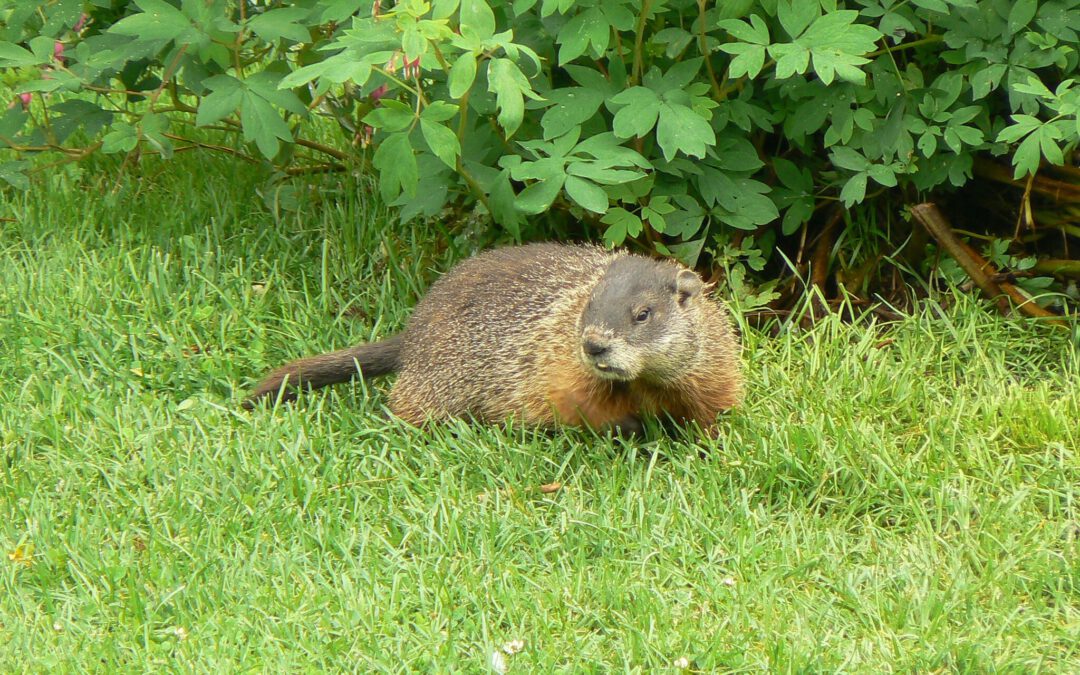
February 2nd is Groundhog Day, so it seems appropriate that we begin nature coverage this month with the groundhog. Most folks probably know the legend that if the Pennsylvania Groundhog, known as Punxsutawney Phil, pops his head out of his burrow and sees his shadow, there will be six more weeks of wintery weather. But, if it’s cloudy and he cannot see his shadow, we will have an early spring. Phil’s accuracy in predicting the weather is about equal to a coin toss or less, but it makes a good story and holiday.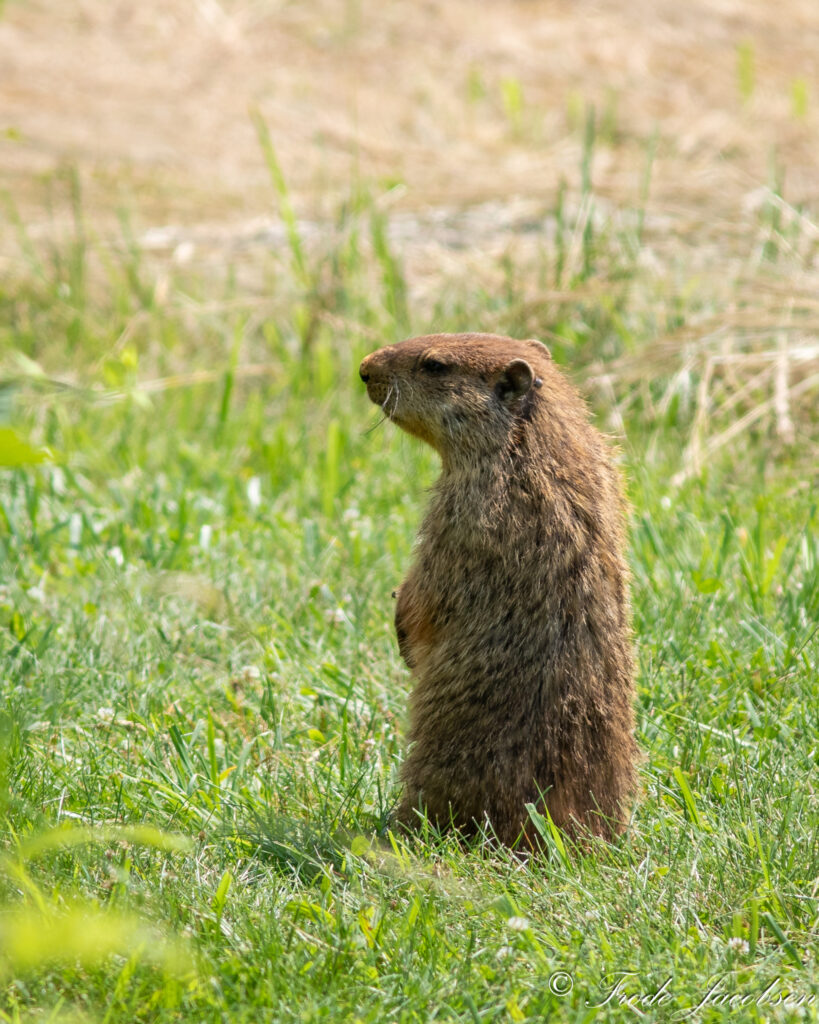
The groundhog goes by many common names – woodchuck, whistle-pig, groundpig, marmot, wood-shock, whistler, thickwood badger, red monk, land beaver, weenusk (a Cree Canadian First Nation name), monax (an Algonquian name meaning “digger”), and siffleur (a French word for a whistling animal). Any animal that has earned that many names has got to be interesting! Scientifically it is named Marmota monax. The Woodchuck name has nothing to do with wood, and the name is derived from the Narragansett Algonquin Native American word wuchak.
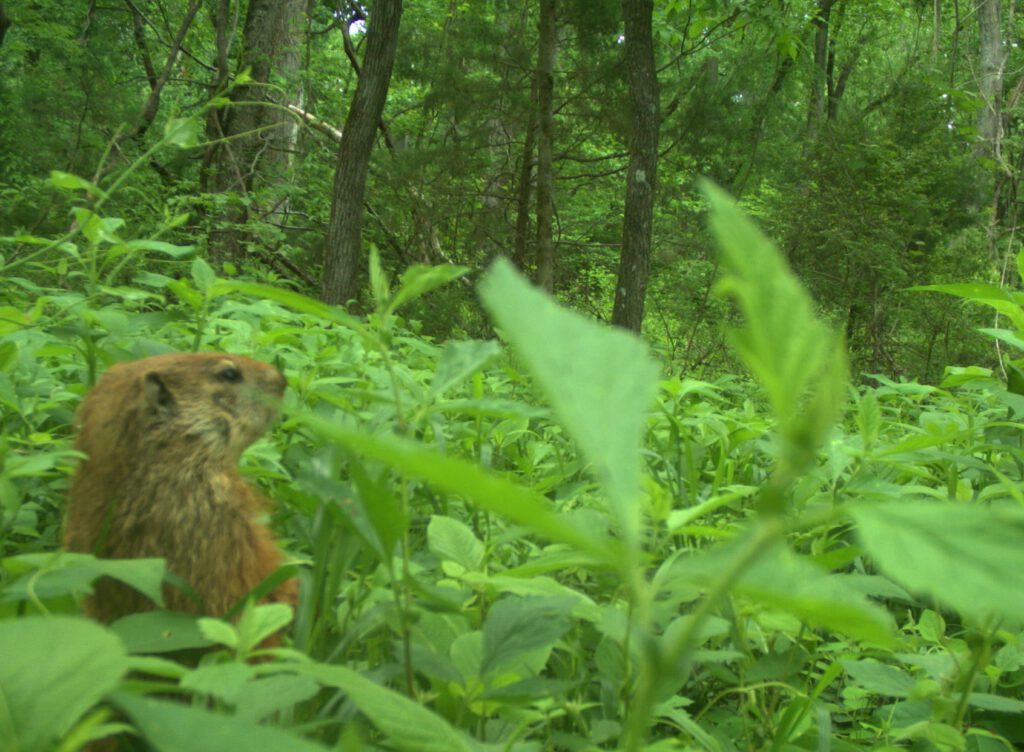
Groundhogs are large, burrow-dwelling rodents most closely related to a group called Marmots, all of which are related to squirrels. Groundhogs occur widely in Virginia (except on the Eastern Shore) and occur east of the Mississippi (except in the deep south). They also range throughout southern Canada and into Alaska. Most of a groundhog’s time is spent in their burrow sleeping, raising young and hibernating. Being primarily vegetarians, they emerge during the day to feed and are often seen standing on their hind feet surveying the land, probably on the lookout for predators. When alarmed, they make a high-pitched whistle sound to warn others, hence the name “whistle-pig.”
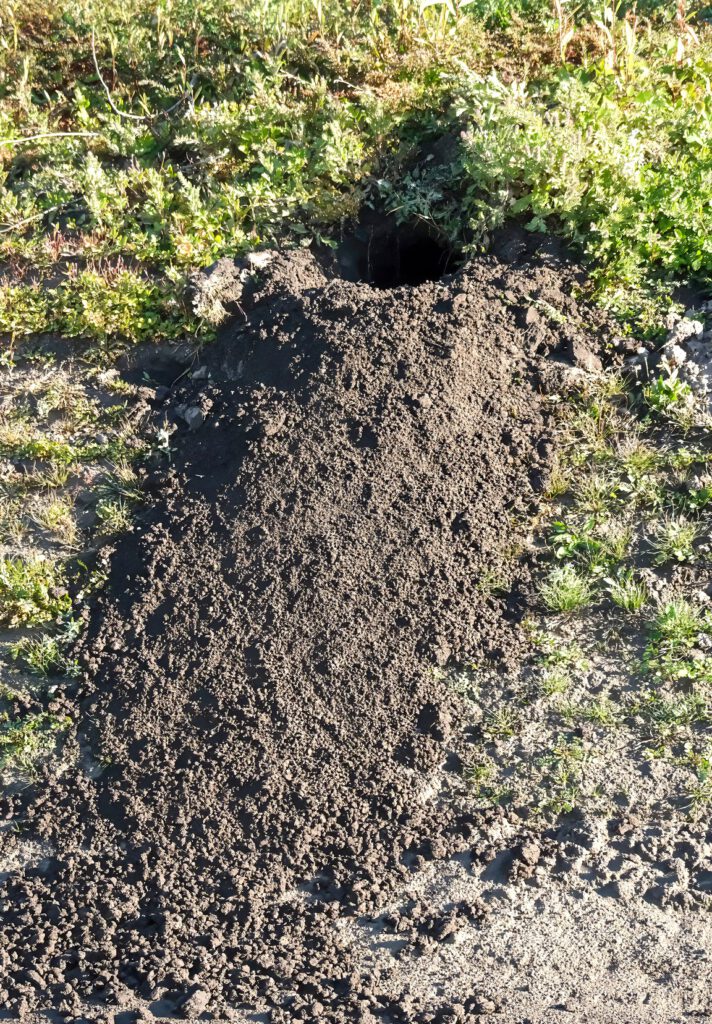 Groundhogs are not appreciated by many, especially gardeners and farmers, because they burrow in fields and eat crops. They are considered a nuisance species in Virginia and can be hunted without restriction. However, they are part of the food chain. Groundhogs aerate the soil and contribute to seed dispersal and nutrient cycling. The burrows where these portly rodents live provide habitat for other animals.
There are a variety of easy, humane techniques to discourage groundhogs from burrowing in your garden or fields. They avoid aromatic foliage and solutions sprayed on garden plants. You can try planting herbs like garlic, lavender or chives around the edges of your garden, or try a commercial or homemade spray consisting of aromatic cayenne pepper and garlic. Three-to-four-inch fencing is also effective in discouraging them, especially if slanted outward at the top.
Groundhogs are true hibernators meaning they go into a very deep sleep in the winter. This is unusual for rodents; most rodents go into a semi sleep (torpor) for the winter and have the ability to wake up at times and search for food. With true hibernation, the groundhogs are fully “asleep” from about October through February. To prepare for this long winter’s sleep, they eat enough to double their weight in late summer, so they can survive with no food whatsoever for several months. The dens where groundhogs hibernate are separate from their spring and summer dens and are usually in more wooded areas than the summer open-area dens. A groundhog typically lives 2 to 5 years although in captivity there are reports of an individual surviving for 14 years.
Whistle-pigs, as I like to call them, can be a pest for farmers and gardeners but they do provide some valuable ecosystem services. Like most native animals, they can be appreciated and tolerated in our wild lands and live in harmony around us, too.
Recent Comments