By Rob Hedelt
When people who use conservation easements to protect their land try to explain why they do it, most focus on general terms about their love of nature and open spaces.
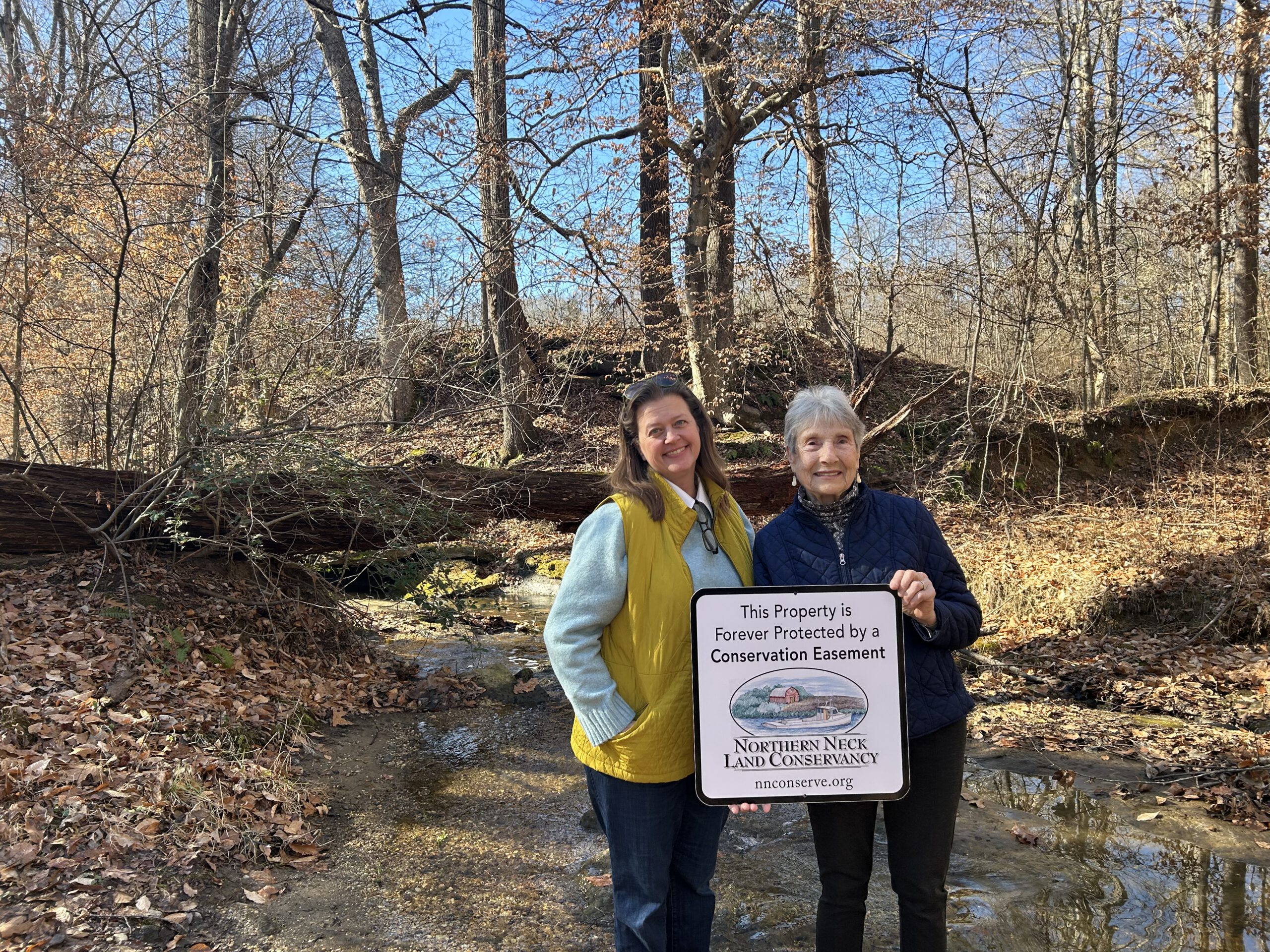
Few have explained their motivation more eloquently than Becky Shelton, a Stafford County resident and former teacher who recently placed a conservation easement, held by the Northern Neck Land Conservancy, on her 128-acre farm property in King George County.
There’s more. Becky protected the 87-acre farm where she lives along Bethel Church Road through Stafford County’s purchase of development rights program.
Those two together mean that some 215 acres will be covered by only woods, pastures and crops. Her home and a few agricultural buildings are the only things rising from the ground besides stalks of corn or blades of grass that will become hay.
On a recent visit to her home in Stafford County, the former teacher explained that she and her recently deceased husband agreed that they didn’t want those lands one day covered in subdivision homes or, more recently, data centers.
“I have always felt, as Native Americans would say, that we never really own property,” said Shelton, “Instead, we need to be stewards of the land today, and take care of it until the next person can take care of it tomorrow. And to me, taking care of it means keeping it and leaving it as natural as possible and still beautiful.”
She added, “I’ve never spoken about this as ‘my land.’ For a lifetime I’m going to do the best I can with it, then turn it over to somebody else who loves it.”
When a conservation easement is placed on a property, the landowner will often qualify for tax credits they can use or sell. Landowners can farm or timber the acreage, allow hunting on it or sell it, with the prohibitions against development passing with the property to any future owner.
Shelton said she would have loved to be able to purchase more land to protect but was worried about the debt that would be taken on in buying additional tracts of land at today’s much higher costs.
Shelton was a longtime teacher in Stafford, teaching many different subjects, and eventually focusing on special education.
Having originally come to the area to attend what was then Mary Washington College, Shelton loves spending time on the properties she has conserved, including the more secluded tract along Muddy Creek.
On the day of the visit, Shelton led a brief tour of the 128 acres in King George, marked on one side by Muddy Creek, which is the dividing line between Stafford and King George.
She smiled at seeing an eagle cutting lazy circles above the tall pines and then pointed out an oyster fossil at the edge of the creek where water trickled off stony ledges before continuing.
“Earlier this year, there was a waterfall here when there was so much more water coming through,” Shelton said. “It’s interesting how things change with the seasons.”
She loves seeing the different seasons on the land with some steep inclines and has enjoyed a lifetime raising animals and crops including hay and corn for feed.
“Some people talk about the vacations they’ve been on or want to take, but I always just wanted to be here on the farm,” she said. “There’s something unique and soothing about nature, which is why I want this to stay as it is.”
Recent Comments