By Kevin Howe – Board Member, ecologist, Master Naturalist
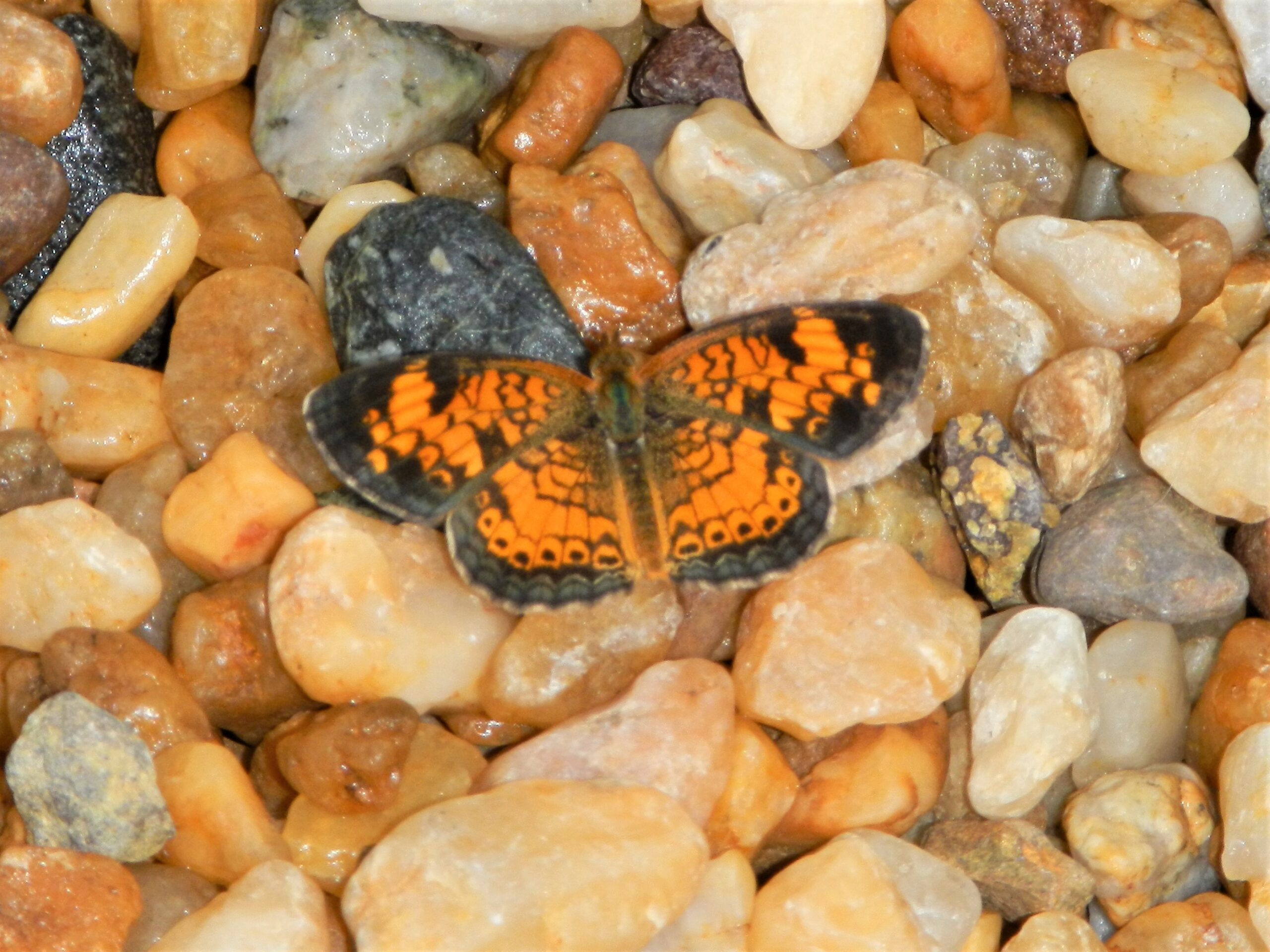
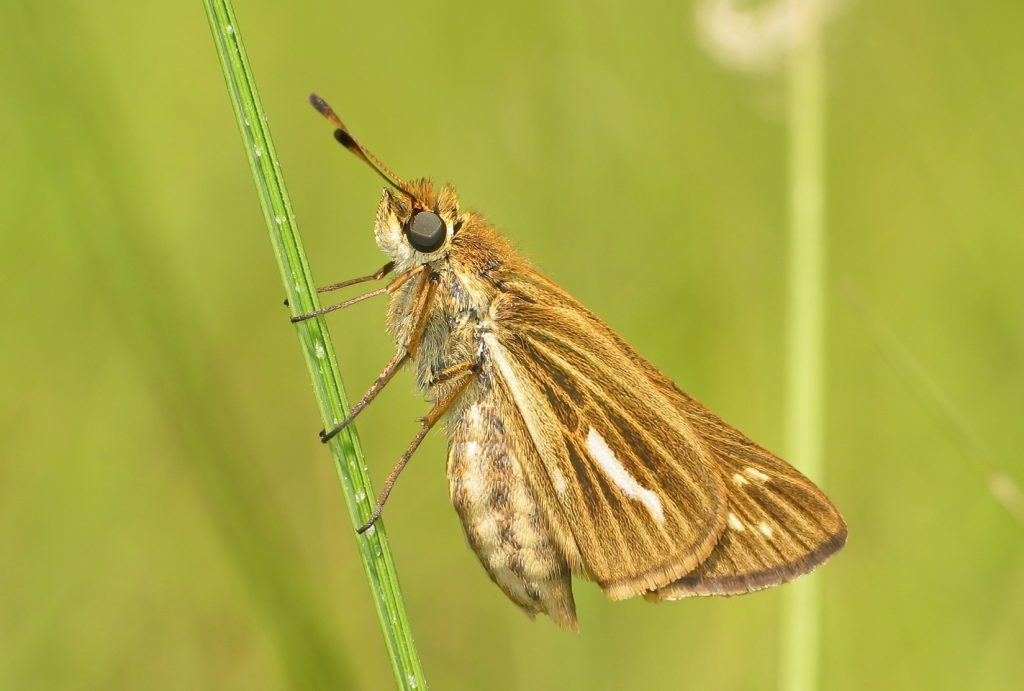 Adult butterflies are probably the one insect that anyone over the age of three can recognize. We have about 825 different butterflies in North America (750 in the US) and over 100 species in Virginia. At Northern Neck Land Conservancy’s Bay View property, we have recorded 33 different species ranging from the common Pearl Crescent and Eastern Tailed-blue to the less common Salt Marsh Skipper. Since Northumberland County is known to have over 70 butterfly species; Bay View undoubtedly has several species we have not yet observed (data from iNaturalist.org).
All butterflies have four life stages – egg, larvae (caterpillar), pupae (cocoon or chrysalis) and adult. The adults are the ones we see fluttering around flowers in spring through fall. If we are lucky, we might see caterpillars munching away on leaves or see tiny butterfly eggs, typically on the underside of leaves, or even more lucky we might see the pupae hanging somewhere.
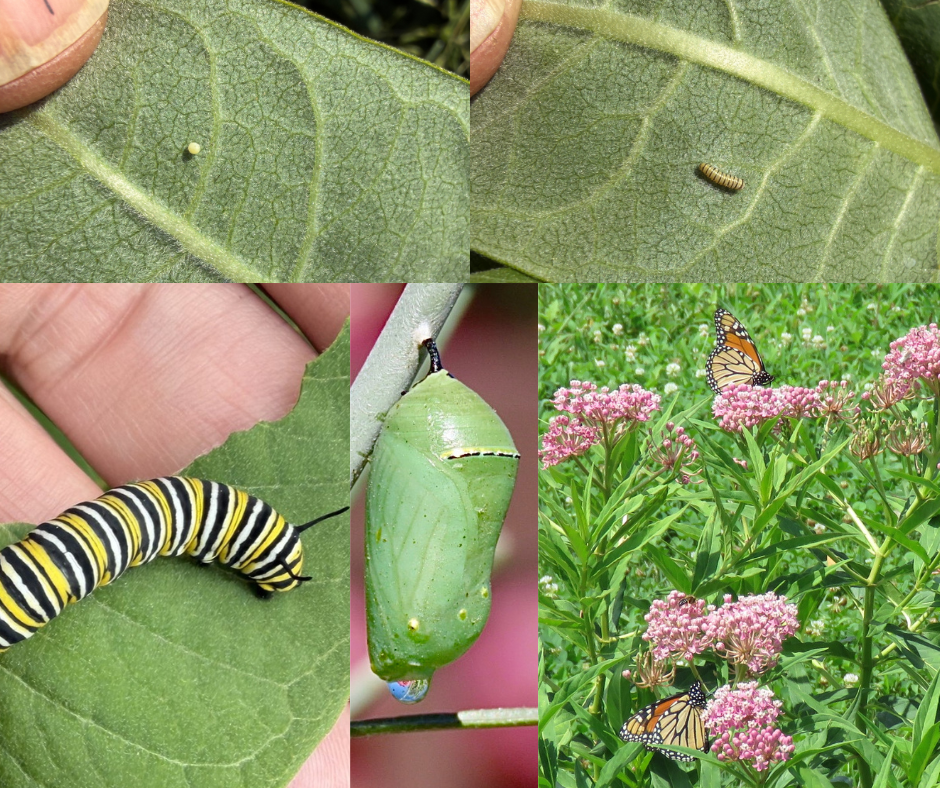 Photo: The Life Cycle of a Monarch Butterfly:
(1) Monarch Caterpillar Egg on Milkweed,
(2) Young Monarch Caterpillar on Milkweed,
(3) Older Monarch Caterpillar,
(4) Monarch Pupa,
(5) Monarchs on Swamp Milkweed.
Butterflies are essential to our ecosystems, they pollinate plants, provide food for many animals and are indicators of the health of our ecosystems.
When most folks think of pollinators, I’m sure bees come to mind, but butterflies are also very important. Their body shape and long straw-like tongues allow butterflies to get to parts of the flower that other pollinators cannot reach. The butterfly gets covered with pollen that it transfers to other flowers – à la, cross pollination. In their short life stage of two to four weeks, an adult must feed constantly in order to ensure a successful brood of eggs for the next generation; so, they accomplish a great deal of pollination in their short lives.
While adult butterflies seek out any nectar-rich, mostly bright colored flowers to feed on, this is not the case when they lay their eggs. The female must lay eggs in very specific places. Its young caterpillars can only feed on the foliage of one or a few specific plants. For example, Monarch caterpillars feed only on milkweeds (Asclepias) but not just any milkweed; of the 100 or so different milkweed species we have in North America, Monarch caterpillars only feed on 25 to 30 species. This butterfly – host plant relationship is tight, real tight. This holds true for all butterflies. If you are a gardener and you wish to have specific butterflies on your property, you must have specific plants to attract them.
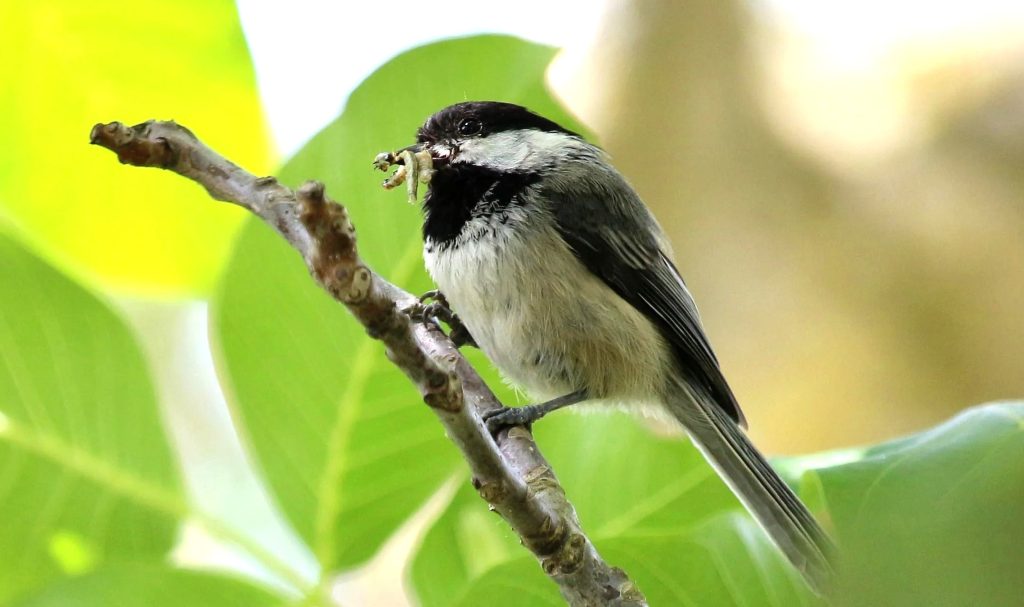 One of the most intriguing ecological facts about butterflies is their importance to baby birds. I bet you didn’t know that butterfly (and moth) caterpillars have been found to be the number one food for young birds in the nest (nestlings). Everyone knows that birds eat seeds, as evidenced by the $6-$12 billion annual bird feed and feeder industry in the US, but about 96 percent of all terrestrial nestling birds relies primarily on caterpillars for food — thanks to their very busy parents. Caterpillars are perfect food for young birds – soft, easy to digest and nutrient rich while high in protein. For the parent, they are easy to catch and abundant in the spring and summer when birds are hatching. This is not an easy job though. For example, extensive research on Chickadees has found that over the 16 to 18 day period when parents are feeding four to six nestlings, they require 6,000 to 9,000 caterpillars to raise their young. That’s 350 to 570 caterpillars a day (10 hours of daylight) or 35 to 57 per hour. And we humans thought parenting was tough!
I hope this has given you appreciation for butterflies and that we all recognize how important they are to our ecosystems, from pollination of plants to baby food for the vast majority of birds. Northern Neck Land Conservancy is dedicated to land conservation for all the right reasons and with that dedication is the realization that conserving land protects all living things from butterflies to birds and, of course, we humans. Land preservation and stewardship enhances the quality of life for all living things in perpetuity.