
By Kevin Howe – Board Member, Ecologist, Master Naturalist
I think most people are well aware of those awful biting tiny ticks. These little, mostly black-brown relatives to spiders and mites bite us and may make us ill. I have had more than my share of tick bites and tick illnesses including Lyme disease and Ehrlichiosis. Most bites result in a little swelling and itch for a few days, but the diseases ticks can transmit range from relatively minor to major. We all love spending time in the great outdoors, but as with any activity from couch surfing to parasailing, we all should know the risks of ticks and how to prevent them.
Their body shape is much like a spider; a tiny head attached to a big abdomen with eight legs. Most are smaller than 3/8 of an inch and are dark reddish or brown in color. They are all bloodsucking parasites feeding primarily on mammals, birds and sometimes on reptiles and amphibians. They go through four life stages – egg, larvae, nymph and adults. Except for the egg stage, all stages are bloodsuckers with most ticks preferring a different host at each of their life stages. Ticks can live as long as three years, but if they do not find a blood host, they will die. Ticks have an incredible ability to detect prey – by the prey’s body heat, odor, breath, or even vibrations. They cannot jump to prey but often just lay in wait (a behavior we call “questing”) and then grab and climb to find a place to bite.
Ticks are widespread in Virginia but are most commonly found in the shady leaf litter of our forests and open areas nearby. They lay eggs in the Spring which hatch in the Fall. When the hundreds to thousands of eggs hatch, they first appear as a black moving mass referred to as a “tick bomb” which looks like a mass of poppy seeds. If you stumble into this “bomb”, keep in mind two things: 1) these just hatched larvae are not yet able to transmit disease; and 2) a lint roller is the best way to remove these “seed” ticks (as we call them) from your skin and clothes. Make sure you wash and dry all of your clothes ASAP.
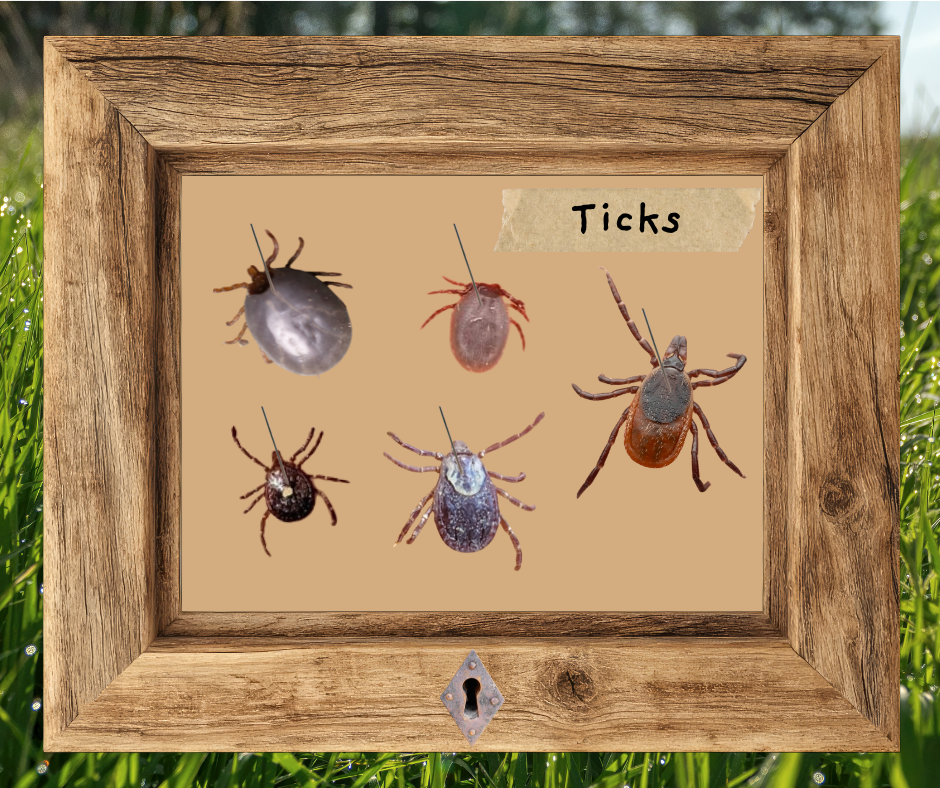
Virginia has 16 species of ticks and 13 of them rarely, if ever, bite humans. The three that bite us are the Blacklegged Tick (or Deer Ticks), the American Dog Tick and the Lone Star Tick. These ticks can transmit a wide variety of diseases with Lyme Disease and Alpha-Gal Syndrome being the most common. If you do get bit, you stand a very small chance of getting sick, but it’s best to be proactive and check with your doctor. Most of these illnesses can be treated well if realized early and you are proactive. If you can save the tick in an old pill jar, that is all the better as identifying it may help with proper treatment should you become sick.
While Lyme can be treated with antibiotics if caught early, Alpha-Gal syndrome is especially concerning as it causes an allergic reaction to all mammal products. The reaction can be quite severe and shows up hours after consuming the product. Climate change, increase in deer abundance and habitat changes have contributed to an increase in ticks and an increase in illness from ticks.
Always be prepared when going outdoors for extended periods. Use insect spray at a minimum. Best practice is to have your clothes treated with Permethrin. You can buy clothes pretreated this way (e.g. LL Bean, Insect Shield) or buy Permethrin and treat yourself. However, if you are a cat owner exercise caution when using Permethrin because it is toxic to them. I personally recommend buying and always wearing pretreated gaiters called Lymeez. They work – I use them all the time.
More information on ticks: https://www.vdh.virginia.gov/ticks/prevention/
Photos provided by Kevin Howe.
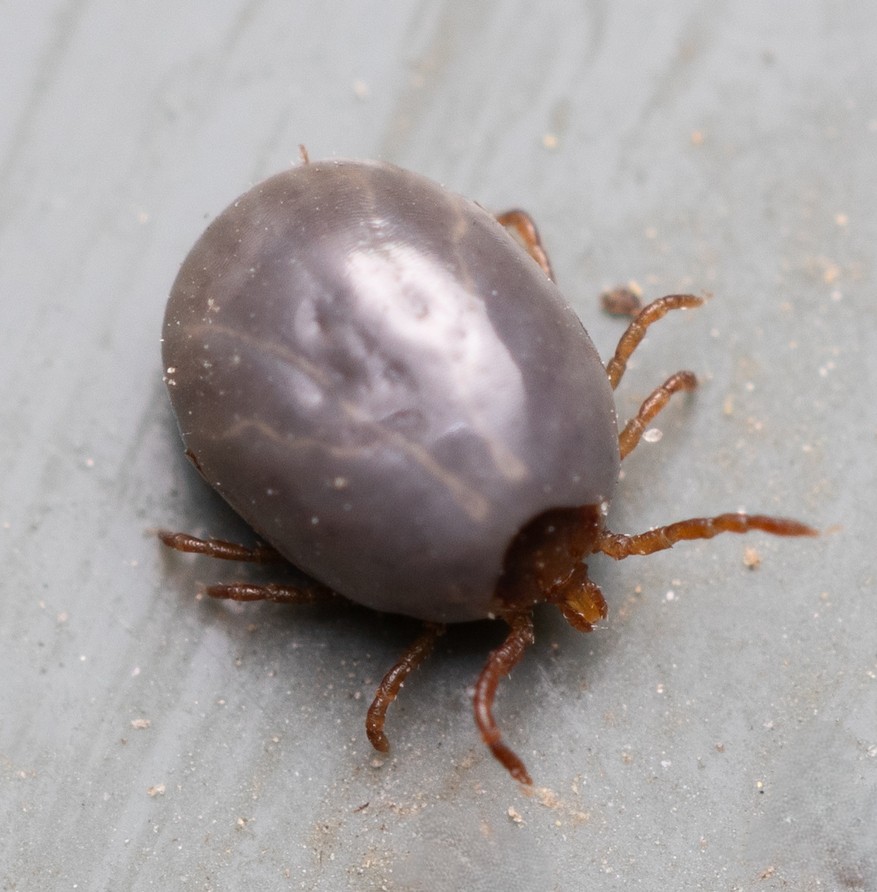 Blood Engorged Tick.
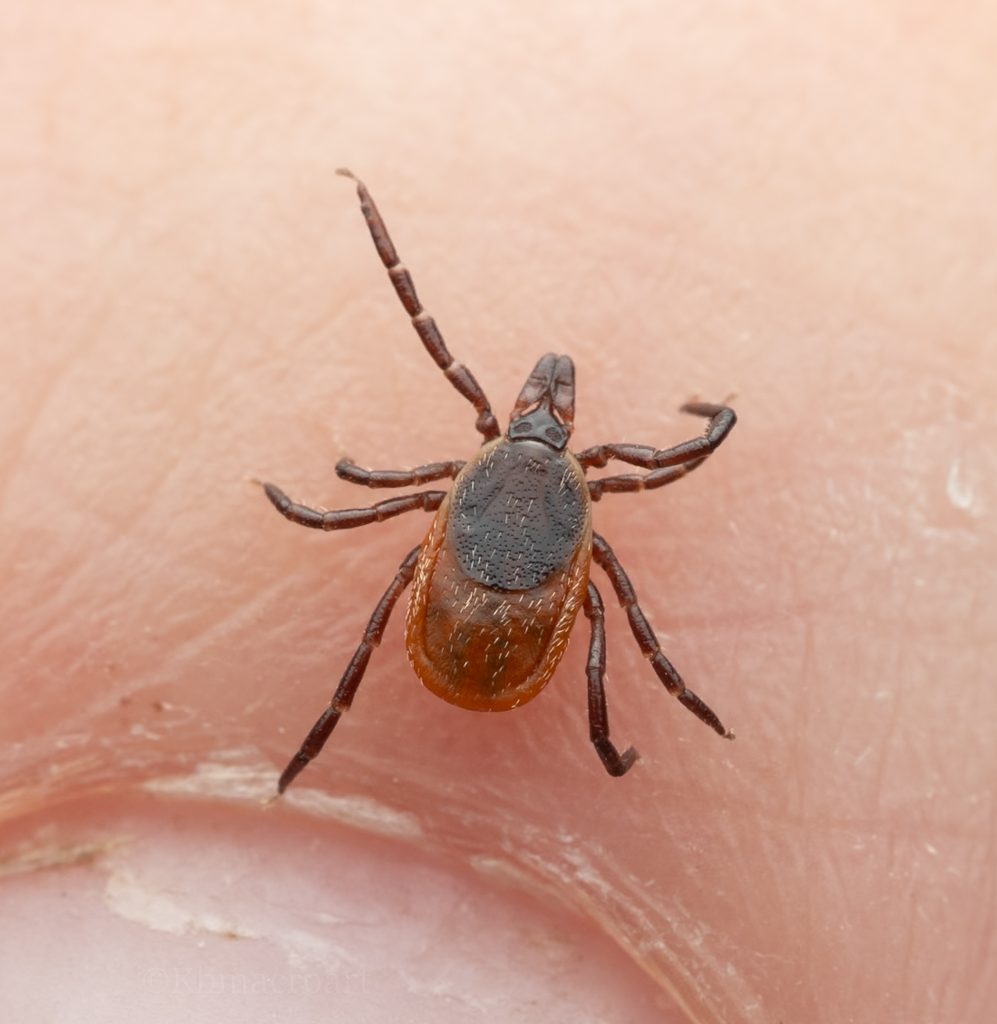 Eastern Black-legged Tick.
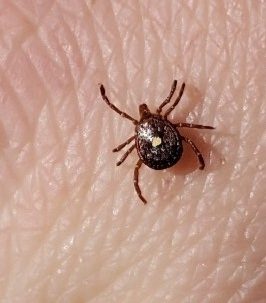 Female Lone Star Tick – with Distinctive White Dot.
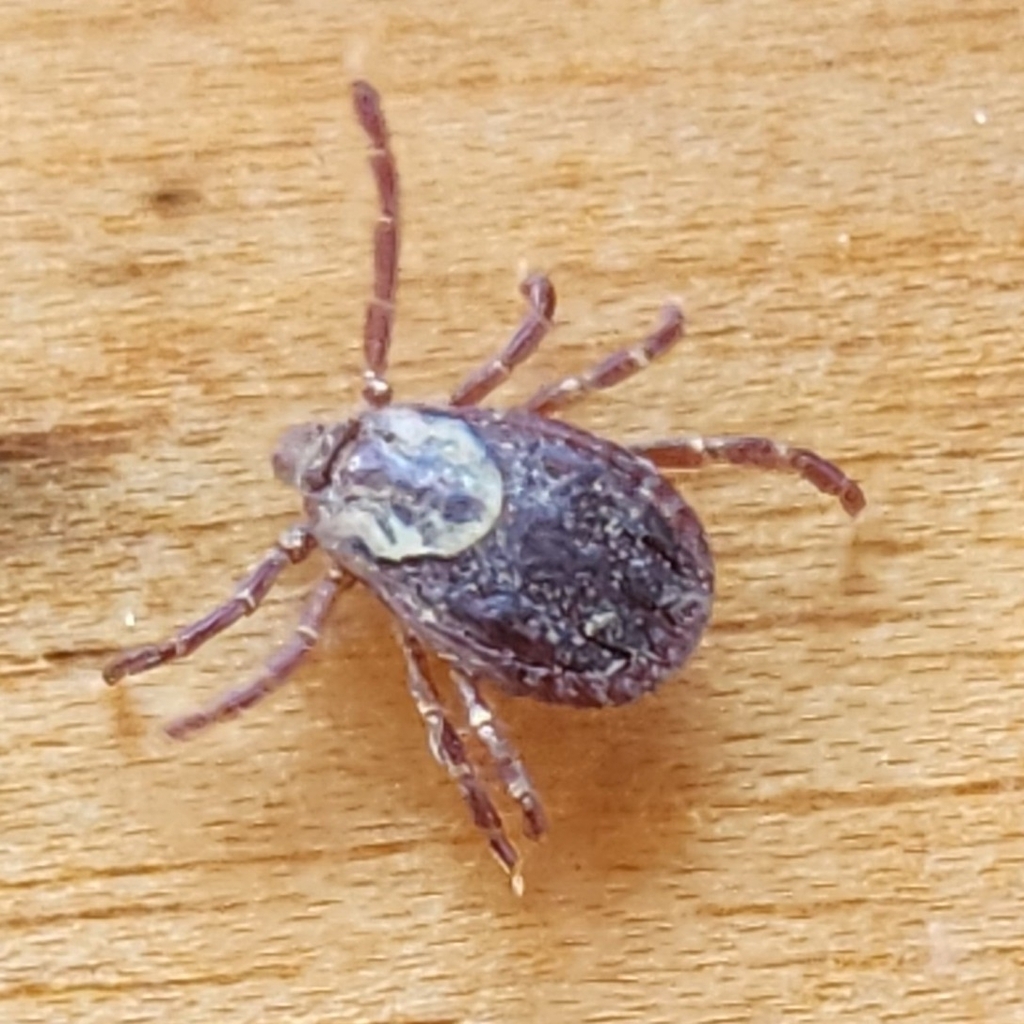 American Dog Tick.