
By Kevin Howe – Board Member, Ecologist, Master Naturalist
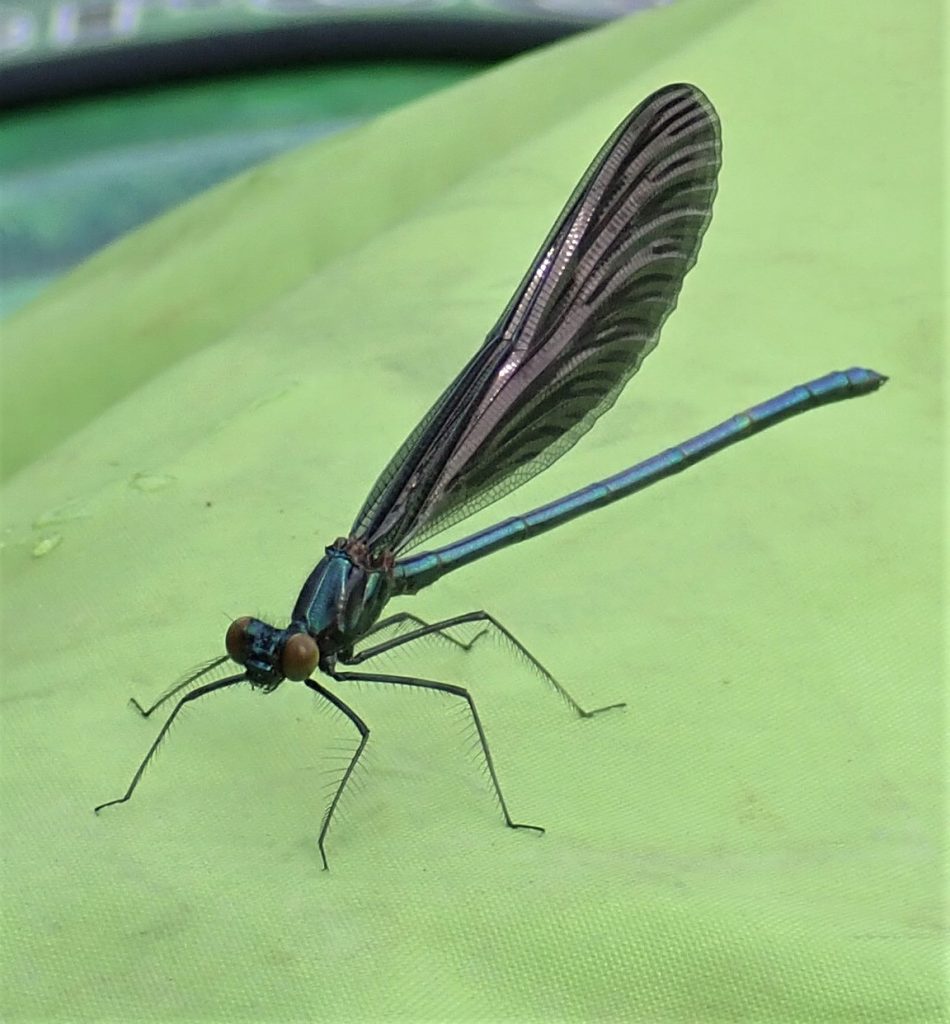
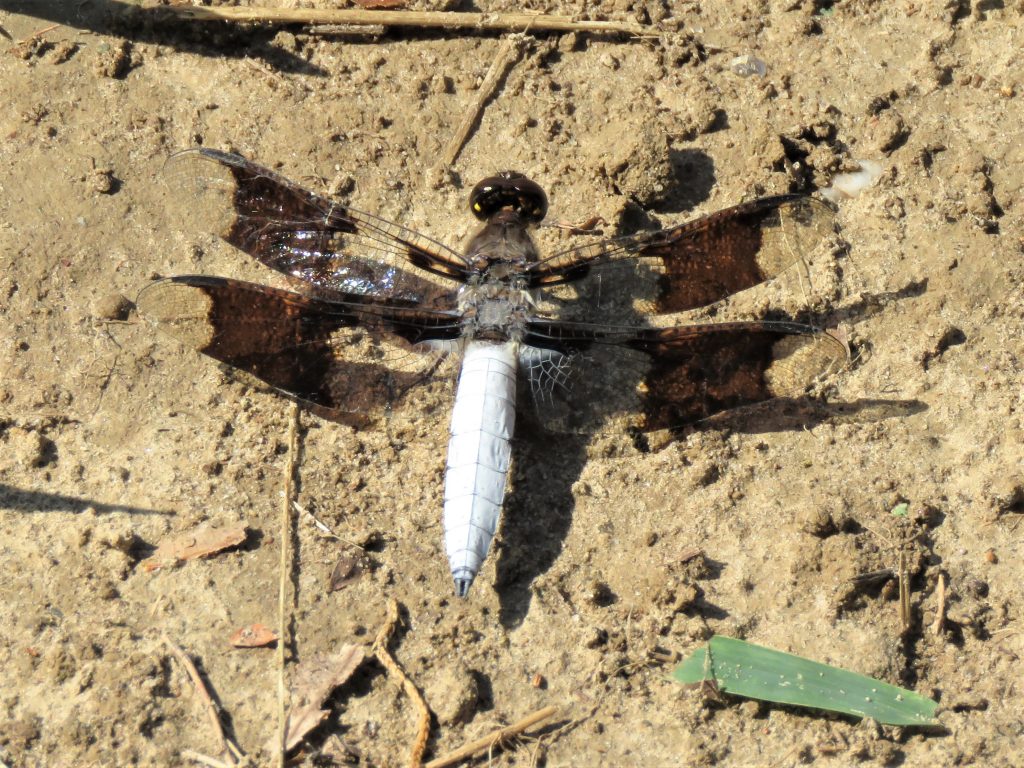 When you get near freshwater anywhere in North America you will see dragonflies and damselflies. They are among the most abundant insect predators we have around water. In Virginia, we have over 140 species of dragonflies and over 50 species of damselflies. These two groups are quite similar in biology, but damselflies are more slender, smaller and hold their wings closed above their body when at rest. Dragonflies are more robust, larger and always hold their wings out to the side, like airplane wings. At our Bay View property, we have observed 4 species of damselflies and 11 species of dragonflies.
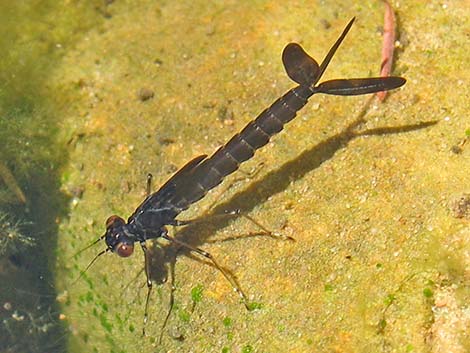
Both groups begin life as an egg usually laid in water or on vegetation above the water. The eggs soon develop into a predaceous larvae that feeds on other aquatic animals. They occupy the bottom of nearly all permanent water bodies and are often the dominant invertebrate predator. Like all insects, they have an external skeleton so the only way for them to grow larger is to molt (shed) that skeleton and grow a new, larger exoskeleton. Each developmental stage is called an instar. Dragonflies and damselflies may go through 10 or more instars before undergoing the major transformation from a crawling aquatic larvae to a flying terrestrial adult. Some species live as larvae for less than a month, while other species spend up to five years as a larva. Although the larvae can be very numerous, most folks never see them because of their aquatic habitats.
 Eventually, the aquatic larva crawls out of the water onto a stick or vegetation and goes through an amazing metamorphosis to become the flying dragonfly or damselfly. This adult will not live long – weeks or months at most – much shorter than their time as a larva. The adults, at least in our region, never live through the winter, although the eggs and their larvae do survive. These changes from egg to larva to adult is a totally amazing metamorphosis in all aspects – from the insects’ appearance to their ecology.
Dragonflies and damselflies have awesome adaptations for catching their prey which is most often done while flying. Watch them sometime and you may think they are erratic in their flight; but actually, they are as precise as any Navy Blue Angel pilot. The erratic flight pattern is actually an exacting flight plan that lets them see, capture, and eat their prey.
 If you have seen these insects up close, you know they have two huge compound eyes. Each eye has up to 30,000 lenses and each functions independently of the others, sending individual information to the creature’s brain. They have nearly 360-degree vision. When they see an insect flying, their brain gathers and processes information to predict where that prey will be in the future. The dragonfly or damselfly will then fly to that exact predicted spot and capture the prey. Lab and field studies with high speed cameras show their success rate often exceeds 95 percent. Their eye to brain neurons (nerves) along with their brain processing power, move information far faster than any supercomputer we have developed. Not bad for a predator that weighs one-fifth of a penny.
These skilled predators have other amazing adaptations including specialized muscles that allow each of their four wings to operate independently and allow them to move precisely in virtually any direction, including backwards. Dragonflies and damselflies also have spiny legs to grab and hold prey, then pass it to their hard, sharp mandibles (jaws), which can easily chew through any hard-shelled insect. While their prey usually ranges from the size of the smallest fly to as large as a butterfly, there are records of large dragonflies taking down hummingbirds!
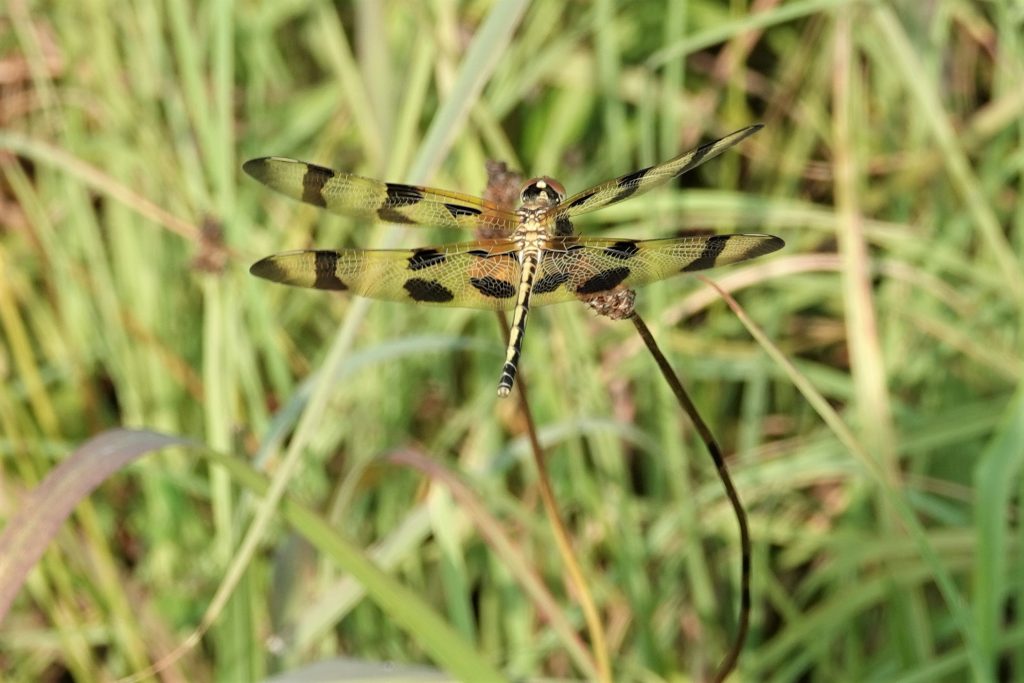 History has handed down many names for dragonflies including Water Snatcher, Devil’s Fly, and Devil’s Darning Needle.
There is little wonder why some drones are named Dragonfly.
While dangerous to their prey, neither dragonflies nor damselflies will bite unless you handle them, and they have no stinger or venom.
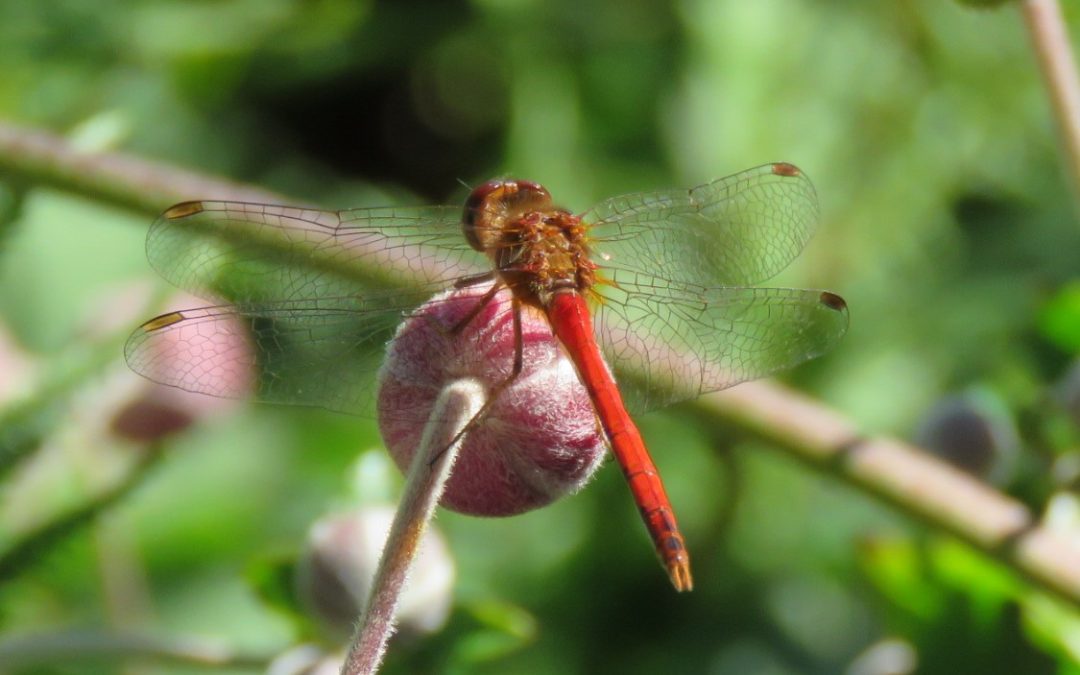
Photos (all by Kevin Howe unless otherwise stated): Autumn Meadowhawk (Featured Image), Common Whitetail (1), Damselfly Larvae (2), Ebony Jewelwing Damselfly (3), Banded Pennant photographed by Betsy Washington (4).
Recent Comments