By Kevin Howe – Board Member, Ecologist, Master Naturalist
In Virginia, we have 121 different species of Mammals, most of which we never see. Several are what we call semi-aquatic, meaning they live much of their life in the water. Four of those species come to mind readily: the Beaver, Muskrat, River Otter and the Nutria. The Nutria is not native to Virginia; it is a South American rodent that was introduced into Louisiana in the 1930s to be farmed for fur. It is not a good quality fur and became a huge pest when fur farms were abandoned and/or the nutria escaped. Luckily, we have no Nutria in our region as they are very destructive to the wetland habitats they occupy, eating down much of the marsh vegetation and leaving eroding shorelines behind. They occur now around the James and Chickahominy Rivers, having expanded from the south. There is a potential for them to expand northward, but there is an active monitoring state and federal program focused on their distribution with planned efforts to eradicate any expansion.
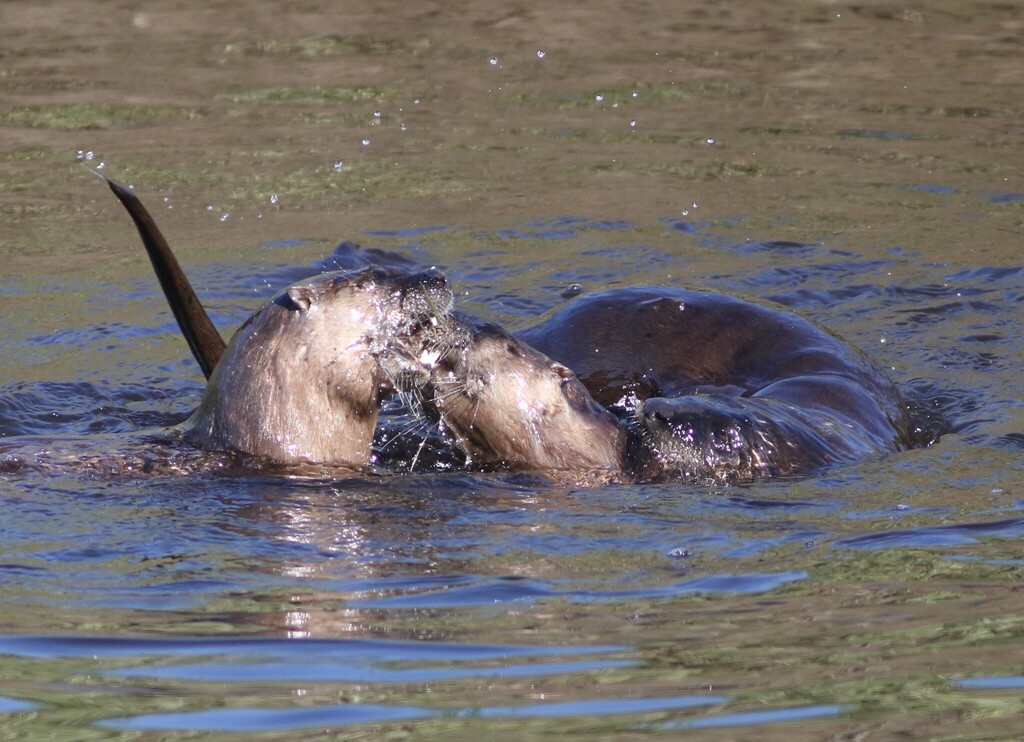
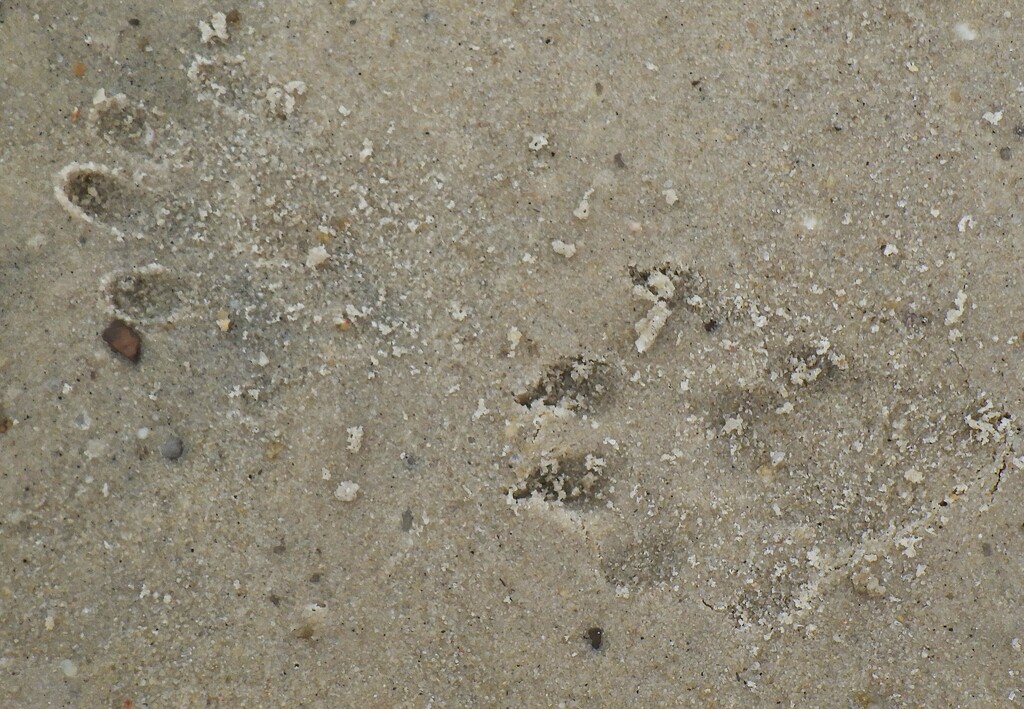
We do have beaver, muskrat and River Otter in our region with the beaver and muskrat found only in freshwater environments. The River Otter is primarily a freshwater dweller but is also often seen in estuarine waters, saltwater marshes and even in the Bay. As you may know, we have an active group of Virginia Master Naturalists who survey the Conservancy’s Northumberland property, Bayview, for flora and fauna. One of our Bayview Virginia Master Naturalists, Katharina Bergdoll, has found evidence of North American River Otters at Bay View. Undoubtedly, some of you have had the pleasure of watching River Otters. I have very happily watched River Otters play, catch fish and even filmed one eating a 10-inch-long fish in less than five minutes.
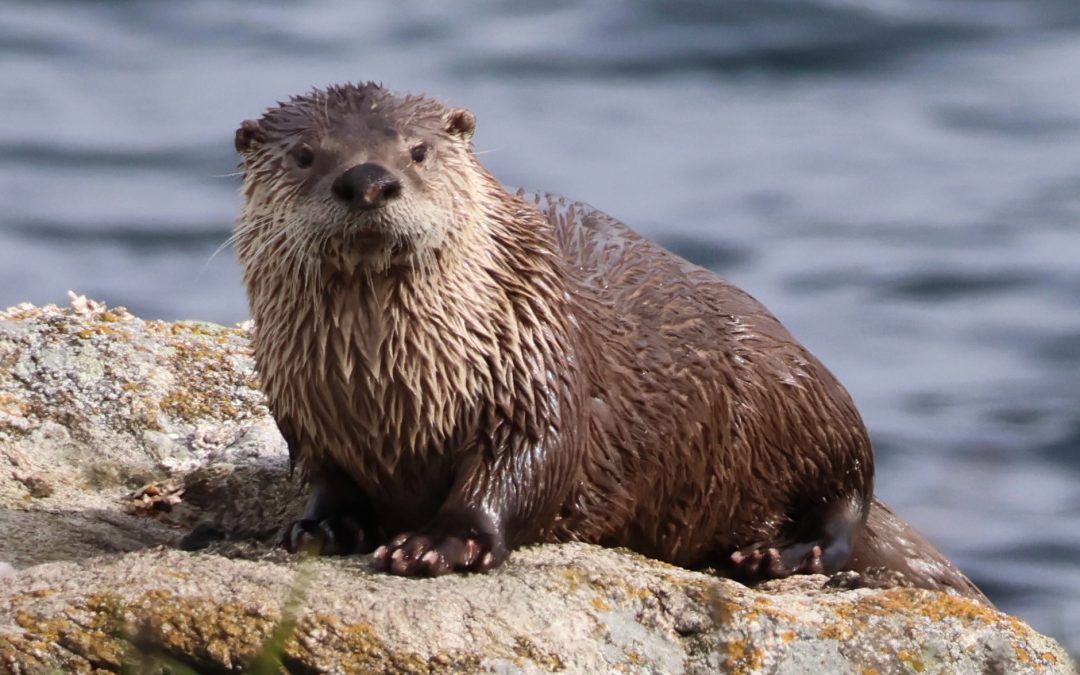
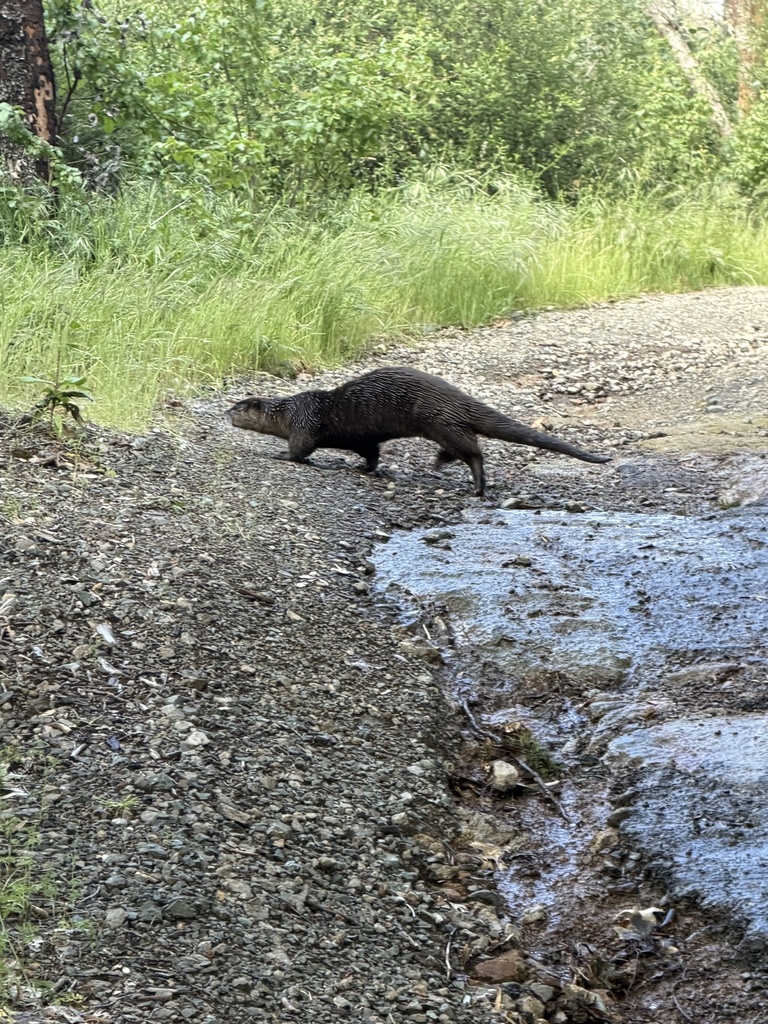
 River Otters have a long slender body, short legs, webbed toes and a tail that is long and tapered. They have a thick coat of brown to black fur with a white chin and throat. Adult male Otters weigh up to 25 pounds- about the same as a large house cat, while females are less at 18 lbs.
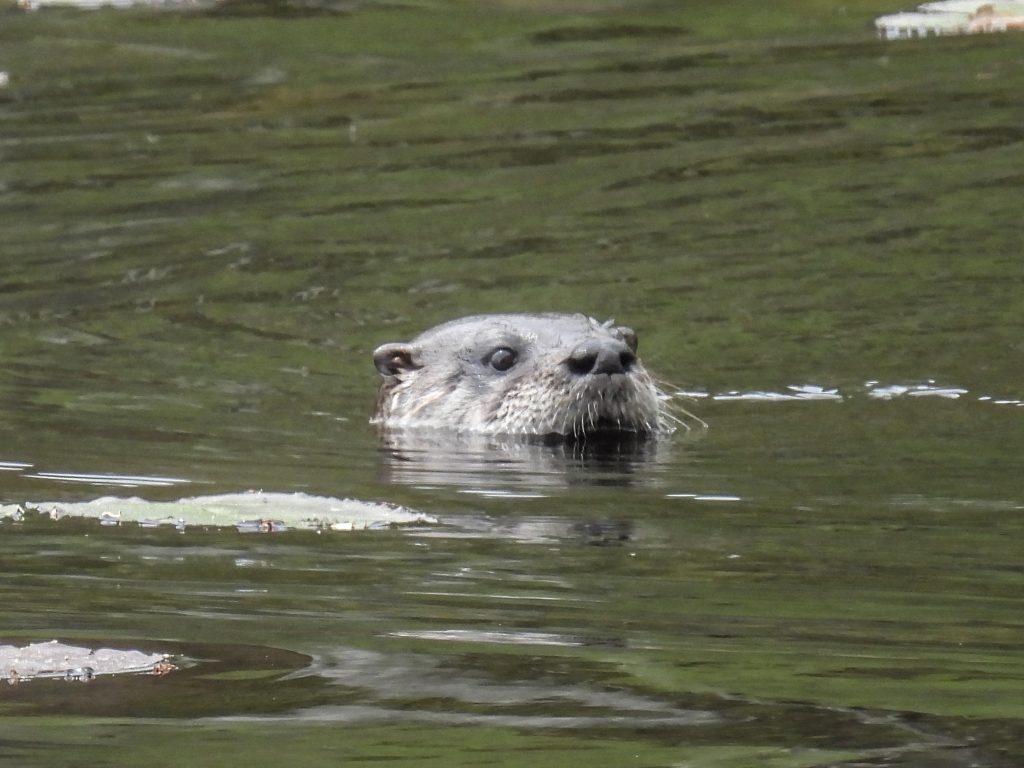 River Otters are equally agile on land or water. Being predators, they will eat most other animals, but fish appear to be their preferred prey. They are social and are usually seen in a family group swimming, chasing each other, wrestling or fishing. They can be active at any time of day or night but are mostly nocturnal. Vocalizations among Otters are common and consist of a series of whistles, chirps or growls. While they can be aggressive when protecting their young, they are generally shy. At times, they may get quite close to you, like if you are standing on the shore or drifting in a kayak, but that is because they are quite nearsighted – an adaptation for exceptional underwater vision to see their prey.
North American River Otters occur throughout North America – coast to coast and from Alaska to extreme northern Mexico. Found in nearly all aquatic habitats in Virginia from the coast to the mountains and occasionally as mentioned, in estuaries and along the coast and bay. One to four kits (young) are born around March or April in a den, which typically is a burrow along the riverbank, a hollow log or a cavity at the base of a tree; they do not dig their own “home”. If an otter den is at water’s edge, it will usually have more than one underwater entrance. River Otters have a territory (home range) and research has found it varies from 3 to 30 square miles.
 Unfortunately, River Otters are extinct in some areas of Virginia and elsewhere. Over-harvesting for their fur, loss of wetland habitat and industrialization along rivers are the main causes. In Virginia, Otters had declined to such a point that the state declared them endangered in 1978 and made great efforts to restore their populations. Today they are a Virginia conservation success story and have been restored to many of the habitats where they had disappeared.
We are lucky in Virginia to have had the Department of Wildlife Resources take an active and successful role in restoring populations of River Otters throughout the Commonwealth. They are beautiful animals and top-level predators helping to keep our aquatic ecosystems in balance.
Photo Captions:
- Featured Image: Handsome River Otter
- River Otters being playful, a common sight
- Tracks of River Otter from Bayview by Katharina Bergdoll
- River Otter swimming
- River Otter heading inland
Recent Comments